
.png)


Hidden Costs of Owning Waterfront Property in New Hampshire
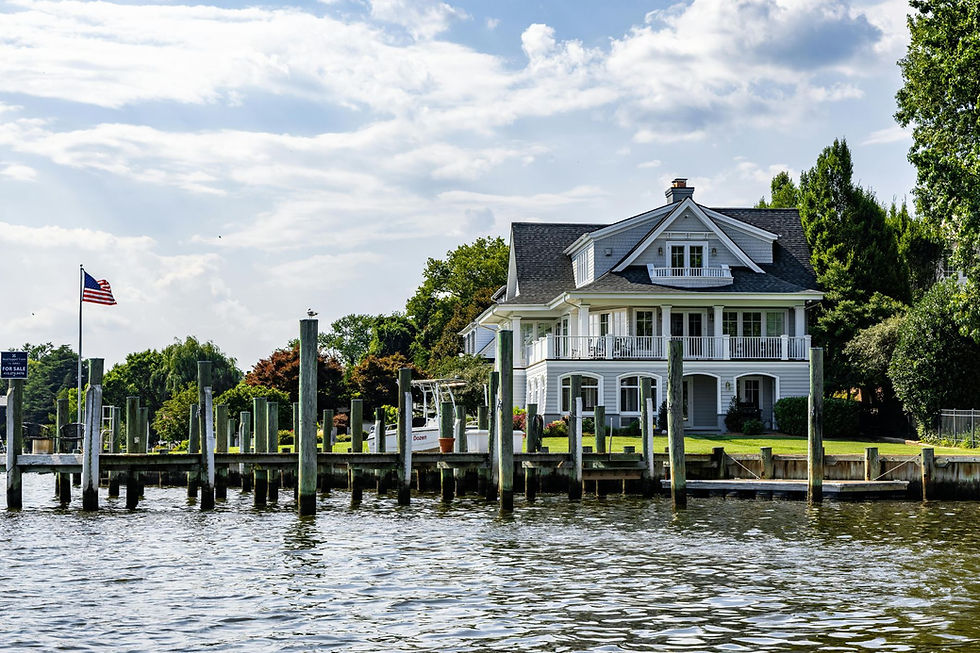
New Hampshire's lakes, rivers, and coastline draw buyers every year who picture quiet mornings on the water and long summer evenings on a private dock. That picture is real, and so is the premium that comes with it. What often surprises new owners is not the purchase price itself, but everything layered on top of it. Understanding the hidden costs of waterfront property in New Hampshire before signing a purchase agreement can save a buyer thousands of dollars and prevent unpleasant surprises after closing.
This guide walks through the regulatory, insurance, tax, and maintenance costs that come with owning shorefront real estate in New Hampshire, using the state's own statutes and current insurance data as a foundation.
What Makes Waterfront Property in New Hampshire Different?
Waterfront property is not simply a home with a nicer view. In New Hampshire, any parcel that borders a lake, pond, river, or tidal water of a certain size falls under state oversight designed to protect water quality. This means a waterfront owner takes on responsibilities that an inland homeowner never encounters, including limits on what can be built, cleared, or repaired near the water's edge. Those limits directly affect the cost of owning, renovating, and eventually selling the property.
What Is the New Hampshire Shoreland Water Quality Protection Act?
The Shoreland Water Quality Protection Act, found in RSA 483-B, is the primary law governing land near New Hampshire's public waters. It applies to lakes, ponds, rivers, and tidal waters with a surface area greater than ten acres, along with certain smaller rivers designated under the state's Rivers Management and Protection Program.
Key provisions that affect cost and planning include the following.
Protected shoreland zone: Extends 250 feet landward from the reference line, generally the high-water mark, and regulates vegetation removal, fill, excavation, and construction within that zone.
Waterfront buffer: The area within 50 feet of the reference line, where primary structures must be set back and where removing natural vegetation is restricted, with limited exceptions for water access.
Natural woodland buffer: Between 50 and 150 feet from the reference line, at least 25 percent of the area must remain in an unaltered, vegetated state.
Impervious surface limits: Once impervious coverage within the protected shoreland exceeds roughly 20 to 30 percent of the lot, a stormwater management plan certified by a professional engineer is required before further construction can proceed.
A buyer who wants to expand a camp, add a patio, or build a garage close to the water may find that these rules limit the project or add engineering costs that would never apply to a typical inland lot.
How Much Do Dock and Shoreline Permits Cost in New Hampshire?
Any new dock, boathouse, jet ski lift, or shoreline stabilization project requires a wetlands permit under RSA 482-A, administered by the New Hampshire Department of Environmental Services. Repairs and replacements of existing docking structures may also require a permit unless the structure has been registered.
Current fee structure for wetlands and shoreline permits includes:
A base application fee that rose to $600 as of July 1, 2025, following the 2026-2027 state budget.
Additional charges tied to project size, historically calculated at roughly $4 per square foot for permanent dock surface area, $2 per square foot for seasonal dock surface area, and $0.40 per square foot for dredge or fill.
A voluntary dock registration option priced at $200, valid for five years, which exempts an existing legal dock from needing a new permit for each future repair.
An Alteration of Terrain Permit, required separately under RSA 485-A:17, for any project disturbing more than 50,000 square feet of contiguous land within the protected shoreland.
None of these figures include the cost of the marine contractor, engineer, or surveyor typically needed to prepare the application itself, which can add several hundred to several thousand dollars depending on project complexity.
How Much Does Flood Insurance Cost for Waterfront Homes in New Hampshire?
Because standard homeowners insurance does not cover flood damage, most waterfront owners need a separate policy through the National Flood Insurance Program or a private flood insurer, particularly if the home is financed with a government-backed mortgage.
As of early 2026, New Hampshire had roughly 8,507 active NFIP policies, with an average annual premium near $1,149. That statewide average masks significant variation. Properties in Coos and Grafton counties have averaged more than $3,000 per year, while lower-risk inland homes may pay only a few hundred dollars. Statewide averages have also climbed sharply since FEMA rolled out its Risk Rating 2.0 pricing model, which replaced flat zone-based pricing with property-specific factors such as distance to water, elevation, and rebuilding cost. Some industry sources place the current New Hampshire average as high as $1,100 to $2,500 depending on the risk profile of the property and the year of the data cited.
The practical takeaway for a waterfront buyer is simple: request a flood insurance quote before making an offer, not after. A property just outside a mapped flood zone today may still carry meaningful flood risk, since FEMA maps are based on historical data and do not always reflect current rainfall patterns or upstream development.
What Does a Septic Site Assessment Involve for Waterfront Property Sales?
Under RSA 485-A, any developed waterfront property with an on-site septic system that sits within 200 feet of a water body regulated by the Shoreland Water Quality Protection Act must have a Site Assessment Study completed before the sale can close. This assessment evaluates whether the septic system is functioning properly and meets current state standards.
If the assessment identifies a failing or noncompliant system, the cost of repair or full replacement falls to the owner, and system replacement near a protected shoreline is typically more expensive than a standard inland installation because of setback requirements, soil testing, and engineering review. Buyers should factor this possibility into their offer and, where possible, request the assessment early in the transaction.
Why Are Property Taxes Often Higher on Waterfront Homes?
New Hampshire has no broad-based income or sales tax, which places a heavier reliance on property taxes to fund local services. Waterfront land is assessed based on market value, and lake frontage consistently commands a premium over comparable inland acreage. This means the land portion of a waterfront property's assessment is often disproportionately high relative to the structure itself, which can translate into a higher annual tax bill than a buyer expects when comparing the property to a similarly sized inland home.
What Are the Ongoing Maintenance Costs of Owning Waterfront Property?
Beyond regulatory and insurance costs, waterfront ownership carries recurring maintenance obligations that inland homeowners do not face.
Dock upkeep and seasonal removal: Many dock exemptions under state rules only apply if the dock is removed from the water for at least five months each year, which means labor or storage costs for installation and removal.
Erosion and shoreline stabilization: Wave action, ice, and storm runoff can erode a shoreline over time, and any stabilization project requires its own wetlands permit.
Vegetation management: Because natural vegetation within the buffer zones protects water quality, removing or altering it is restricted, which can limit landscaping options and may require replanting if the buffer is disturbed.
Higher wind and storm exposure: Waterfront structures, particularly on larger lakes or the coast, often see faster wear on roofing, siding, and decking due to sustained wind and moisture exposure.
Comparing Waterfront and Inland Property Costs in New Hampshire
Cost Category | Typical Inland Property | Typical Waterfront Property |
Flood insurance | Often optional, low cost | Frequently required, averages roughly $1,100 to $3,000+ per year depending on county |
Land use permitting | Standard local zoning | Additional state shoreland and wetlands permits required for many projects |
Septic requirements | Standard state rules | Mandatory Site Assessment Study within 200 feet of protected water at time of sale |
Property tax assessment | Based on land and structure value | Often higher due to frontage premium on land value |
Dock or shoreline work | Not applicable | Wetlands permit fees plus per-square-foot charges |
Is Waterfront Property in New Hampshire Still a Good Investment?
For many buyers, yes. Waterfront property in New Hampshire has historically held its value well and often appreciates faster than comparable inland real estate because the supply of lake and river frontage is fixed while demand continues to grow. The costs outlined above are real, but they are also predictable once a buyer understands them, and none of them are reasons to avoid waterfront ownership altogether. They are simply part of the true cost of ownership that should be built into a purchase decision from the start.
A well-informed buyer who accounts for flood insurance, shoreland permitting, septic compliance, and property tax realities before writing an offer is far better positioned to enjoy the property without financial surprises down the road.
If you are considering a purchase on a New Hampshire lake, river, or coastal property, or you already own waterfront real estate and want a clear picture of what it is really costing you, reach out to me, Hunter Letendre, REALTOR® with Berkshire Hathaway HomeServices Verani Realty, serving New Hampshire, Maine, and Northern Massachusetts. I am here to help you see the full picture of what waterfront ownership involves, from the first conversation through closing and beyond.

Hunter Letendre, REALTOR®
Berkshire Hathaway HomeServices Verani Realty
Other helfpul articles:
Sources: New Hampshire Department of Environmental Services, RSA 483-B Shoreland Water Quality Protection Act, RSA 482-A Fill and Dredge in Wetlands, RSA 485-A Water Pollution and Waste Disposal, FEMA National Flood Insurance Program, Wentworth Watershed Association, InsuredBetter, FloodPrice.com, Clovered.com
This article is intended for general informational purposes only and does not constitute legal, financial, or real estate advice. Market conditions and regulations vary and may change. Readers should always consult qualified professionals regarding their specific situation.


Comments