
.png)


What’s It Like Living in Windham, NH? – A Local Guide
Updated: Mar 5

Windham, New Hampshire sits in Rockingham County and is part of the greater Boston-area suburban belt. According to the 2020 census, the town’s population was 15,817. Over the past decade, Windham has grown as families and professionals seek a balance of semi-rural character with access to regional centers.
Windham covers about 27.78 square miles in total, of which 3.73% is water. The town includes several unofficial zones or villages—Windham proper (town center/“downtown” nucleus), West Windham, and Windham Depot. As with many New England towns, the “downtown” is modest—residential streets, local services, small municipal buildings—while the outer corridors (along major roads such as Route 111, Route 28) are more commercialized, with shops, businesses, traffic, and mixed uses.
As you move outward from the center, neighborhoods tend to become more spacious, wooded, less densely developed, with larger lots and more rural characteristics.
What Are the Demographics, Income & Cost of Living?
Median household income in Windham is $189,450, and average household income is about $224,990 (2023 data)
Windham is ranked among the higher-income towns in the region, and many households earn well above state averages.
Real estate is in high demand. The median listing home price in mid-2025 was around $737,000, with homes selling in 42 days on average.
Owning is overwhelmingly dominant in Windham: most occupied units are owner-occupied. Compared regionally, Windham’s cost of housing and taxes is on the higher side relative to many New Hampshire towns, reflecting demand, location, and limited supply. But compared to inner suburbs of Boston, Windham can offer more space and somewhat more favorable property taxes (depending on location).
How Are the Schools in Windham?

The Windham School District serves PK through grade 12, with about 3,002 students enrolled. The student-teacher ratio is 15:1. Niche ranks the district 7 of 76 among New Hampshire school districts.
On standardized testing, 68% of district students are proficient in math and 73% in reading. Niche reviews note strengths in technology use, curriculum options, and modern facilities, while some commentary raises concerns about resource allocation, class sizes, or equity in support.
Here’s a breakdown of the four main public schools in Windham:
Golden Brook Elementary School (PK–4)
Enrollment: 1,144 students
Student-teacher ratio: 19:1
Proficiency: 69% math, 67% reading
Windham Center School (Grades 5–6)
Enrollment: 433 students
Student-teacher ratio: 14:1
Proficiency: 74% math, 78% reading
Windham Middle School (Grades 7–8)
According to Niche’s listing for public schools, Windham Middle School is included in the district portfolio of schools
While full detailed stats via Niche are limited in public listing, public school ranking sites (e.g. GreatSchools) list Windham Middle among the district’s schools.
Based on comparable trends and local reports, the ratio and proficiency would generally fall near district averages (i.e. mid-teens for ratio, proficiency in reading/math in the 60–75% band)
Windham High School (Grades 9–12)
Niche gives the school an overall grade of A- / “excellent”, and ranks it #8 of 91 public high schools in New Hampshire.
Many reviews highlight strong academic culture, varied course options, and engaged faculty
These schools together often become a significant factor for families considering relocation to Windham.
What Are the Neighborhoods & Housing Patterns?

Windham is not monolithic; there are several distinct neighborhood types and zones:
Town Center / Historic Core (Windham proper): More mature subdivisions, older homes, roads with more character, closer to municipal buildings, parks, and local services.
West Windham / Rural Edges: More wooded lots, larger parcels, a quieter feel with less traffic and fewer commercial intrusions.
Route Corridors (Route 111, Route 28): These corridors host much of Windham’s commercial development—shops, businesses, traffic, mixed-use nodes. These roads are busier but shorten access times to services.
Windham Depot / Transition Zones: Midway areas near the rail/old depot zone (less prominent now but historically significant) often blend residential and small-scale commercial or institutional uses.
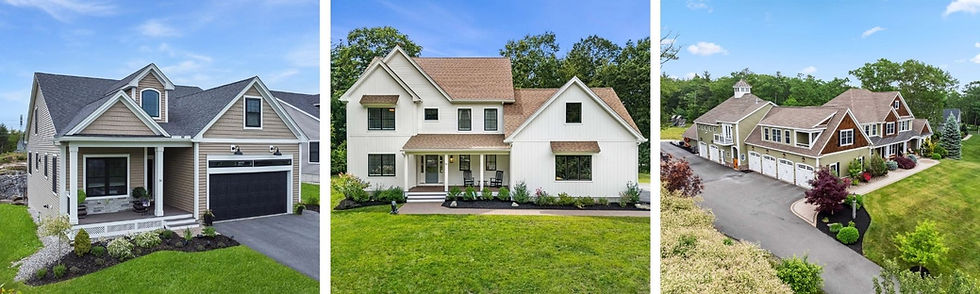
Subdivisions & Newer Developments: In many outlying parts, newer subdivisions or custom homes on larger lots are common, offering modern amenities, open layouts, and somewhat more privacy.
In the Depot area specifically, home prices have also seen recent increases: median values in that zone are rising year over year.
Overall, most of Windham’s land use is residential (circa 92%), with only 8% reserved for commercial use, per town planning data.
How Long Are Typical Commutes & Access to Regional Hubs?

Because much of life in Windham revolves around driving, here are typical estimated drive times (depending on traffic):
Boston (Downtown): 45 to 60 minutes
Manchester, NH: 30 to 40 minutes
Nashua, NH: 20 to 25 minutes
Salem, NH (for shopping, retail): 10 to 15 minutes
Route 93 access / I-93 corridor: relatively quick access from parts of town
Local errands: many daily drives to schools, parks, shopping tend to be 5 to 20 minutes depending on where in town you live
Because Windham functions in many respects as a bedroom community, a sizable share of residents commute into Massachusetts or toward major New Hampshire job centers.
What’s the Employment / Economic Environment?
Windham is primarily residential in character. Its local job base is comprised of small and medium businesses, retail, professional services, and civic or institutional roles.
The town is organized such that most commercial activity is concentrated along main corridors (Route 111, Route 28).
Given the high educational attainment and incomes in town, many residents hold professional, managerial, or technical positions. However, many commute outside Windham for work, especially into New Hampshire cities or into Massachusetts.
What Is Everyday Life Like in Windham?

If you lived in Windham, here’s what many residents would say life often feels like:
Drive-centric daily routines: Because retail and services are spread along corridors or in neighboring towns, many routine errands require driving.
Quiet residential evenings: Away from the busier commercial roads, many neighborhoods return to peaceful, low-noise environments after dark.
Nature & green spaces: The town retains forested parcels, trails, ponds, and open land, which many residents appreciate for walking, birding, and outdoor activity.
Community engagement: Seasonal festivals, town meetings, park events, volunteer committees, and local civic involvement tend to be more visible than in larger towns.
Traffic during peaks: In morning and evening rush hours, major routes (111, 28) can get congested, especially heading toward major interstates or commuter arteries.
Limited walkability in many zones: Because of the spread-out design, many places are not walkable from home, particularly in the outer neighborhoods.
Pros & Cons of Living in Windham

Pros / Strengths
High rate of homeownership and stable residential character
Well-regarded public schools across grade levels
Reasonable commuting distance to Boston, Manchester, Nashua
Balanced blend of rural & suburban lifestyle
Strong home value appreciation in recent years
A community atmosphere with local identity
Cons / Trade-offs
High cost of housing and property taxes
Many errands require auto travel; limited local density
Commutes can stretch during peak times
In more remote zones, amenities may feel distant
Growth and new development can alter neighborhood character
How Windham Compares with Nearby & Regional Towns

Compared to many interior or more rural New Hampshire towns, Windham is pricier—but offers superior access to regional job centers and transit corridors. Compared to suburbs nearer Boston, Windham often offers more land, lower density, and somewhat more favorable tax burdens, albeit with fewer public transit options. Among southern Rockingham towns, Windham tends to rank near the top for property values, incomes, school metrics, and attractiveness to families.

Here are notable local attractions, activities, and destinations residents enjoy:
Griffin Park & Wonderland Park — municipal parks with fields, playgrounds, and community events.
Windham Town Forest / Walking Trails — network of trails for walking, wildlife viewing, and nature outings.
Local farms & farmers’ markets — seasonal produce, farm stands, picking events.
Nearby Canobie Lake Park (Salem, NH) — amusement park attraction just a short drive away.
Searles Castle — prominent historic building often used for events and photo interest.
Local festivals & town events — spring fairs, Strawberry Festival, Harvest Fest, community parades, seasonal town gatherings.
Cobbetts pond & water access — kayaking, fishing, summer boating.
These give local residents regular recreation options without needing long drives.
Final Thoughts

If you’re curious what living in Windham, NH might feel like, here’s the takeaway: it offers a blend of suburban and semi-rural living, quality schools, rising real estate values, and access to regional job centers. But you’ll trade off higher costs, drive-dependencies, and commuting during peak hours.
If you’re thinking of moving to Windham or exploring listings in its neighborhoods, reach out to me. I’d be glad to walk you through current properties, help you evaluate which parts of Windham match your lifestyle and budget, and support your real estate journey every step of the way.
I'm an area expert. Whether you're interested in Windham or a nearby town, I would love to help you across NH, ME and MA.

Hunter Letendre, REALTOR®
Berkshire Hathaway HomeServices Verani Realty
Other helpful articles:
Sources: Redfin, Niche, GreatSchools.org, Zillow, Point2Homes, Realtor, Rocket, NeighborhoodScout, WindhamNH.gov, Movoto


Comments