
.png)


What's It Like Living in Manchester, NH? - A Local Guide
Updated: Nov 13, 2025

Living in Manchester, NH is like living in a vibrant, large city with a small-town feel, offering a strong economy, diverse activities, and a high quality of life with no state income or sales tax.
The core “downtown” area features historic mill buildings, the riverfront, dense urban blocks, arts and culture venues. Outside of that, the outer commercialised areas — along major corridors like South Willow Street, near the Mall of New Hampshire and highway access — serve big-box retail, newer development, and more auto-oriented suburban zones.
What are the schools like in Manchester, NH?

The public school system in Manchester is characterised by variety, diversity and mixed academic outcomes. According to Niche, the Manchester School District is ranked Number 1 out of 79 school districts in New Hampshire for “Most Diverse School Districts”.
For example:
Manchester Central High School is ranked the Number 1 Most Diverse Public High School in NH and has a grade of B-minus overall per Niche.
Academic proficiency at Central shows 17% of students math-proficient, 42% reading-proficient.
Another school, Manchester West High School, holds ranking Number 2 of 93 for most diverse public high schools in the state.
What this means is that families looking into schooling here should review individual schools, their programs (AP, electives, extracurriculars) and neighbourhood assignment; the district offers diversity and many opportunities, although academic metrics show room for growth.
What’s the job market and economy like?

Manchester’s economy is relatively diversified: key sectors include healthcare, education, manufacturing, and technology/communications. Major employers in the region include healthcare systems, universities, tech firms and manufacturing operations.
The absence of a general state sales tax and a state income tax on earned income lends extra appeal from a tax-perspective for employees and businesses alike. Also, the convenient access to amenities, major highways and commercial infrastructure strengthens the employment environment.
On the flip side: some residents feel that for very specialised or high-end young professional roles, opportunities may be narrower than in major metros like Boston; commuting outside the region might be required.
What about housing, cost of living & market trends?

Cost of Living
The cost of living in Manchester is higher than the U.S. average. One calculator puts overall cost about 12% above the national average. Housing costs are particularly elevated (18% above national average in one estimate).
Housing Market
The median listing home price as of August 2025 was about $450,000, up 11.5% year-over-year.
Zillow reports the typical home value around $433,659, up 1.5% over the prior year.
Rental trends: average rent around $2,032/month for apartments (853 sq ft) as of September 2025.
Buying vs Renting
Given the rising home prices and competition, prospective buyers should be prepared for bidding pressure and limited inventory. Renters will find that while rents are elevated compared to national averages, they may still be more affordable than many comparable New England metros.
Summary
While no state income tax or sales tax helps, housing remains a key cost driver. For many families or individuals, the value proposition depends on balancing location, housing type (historic vs newer), commute, neighbourhood, and lifestyle priorities.
What are the neighbourhoods like in Manchester, NH?

Here’s a closer look at a few representative neighbourhoods:
North End: Historic district just north of downtown, featuring tree-lined streets, older Victorian/Colonial homes, proximity to riverfront and downtown amenities.
Hanover Hill: East/above downtown, more residential, offering a balance of access to downtown and quieter streets.
Bakersville: South of downtown along the river, mix of single-family homes, apartments, with scenic access and a more relaxed feel.
When choosing a neighbourhood, consider: walkability vs yard space, historic-inventory vs newer construction, commute to downtown or work, proximity to amenities, and budget. The more desirable zones often carry a premium price and/or tighter inventory.
How does everyday life feel living in Manchester, NH?
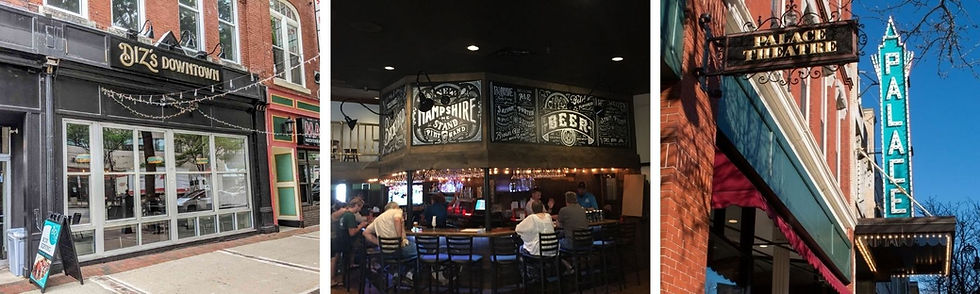
Everyday life in Manchester might unfold like this: You grab coffee at a downtown café, perhaps walk or drive a short distance to work in a healthcare, tech or education role. After work you might stop by a local brewpub, attend a performance at a theatre downtown, or take a walk along the Merrimack River trail. On a weekend you might head out for outdoor recreation — hiking nearby trails, biking, or even a day trip into the White Mountains or the seacoast.
Despite being the largest city in the state, it retains a strong neighbourhood and community-feel. Convenience is high: shops, services, medical facilities are well-distributed. At the same time, trade-offs exist: traffic along major corridors, housing competition, and winters with snow and colder weather.
What are the pros and cons of living here?

Pros
Diverse economic opportunities: tech, healthcare, education, manufacturing all contribute.
Tax advantages: no state income tax on earned income and no general sales tax.
Rich arts & culture: museums, galleries, live music, theatre, restaurant/nightlife scene.
Outdoor recreation: the Merrimack River Valley location affords nearby hiking, biking, skiing and nature.
Convenience: well-connected highways, ample services, good downtown amenities.
Community feel: even as a city, Manchester has neighbourhoods and local events that foster connections.
Cons
Housing & cost pressures: rising home values and rents, mixed housing stock (many older buildings) can mean trade-offs.
Traffic and noise: certain commercial corridors or downtown zones can be busy and congested.
Job market limitations for certain segments: some young professionals feel fewer ultra-specialised roles compared to major metro hubs.
Education variability: while diversity is strong, academic proficiency is variable and some schools have room to improve; families should review individual schools.
Crime in certain areas: as in many cities, some zones have higher incident rates, so selecting the right neighbourhood is important.
How does Manchester compare regionally?

Compared with other New England cities (for example Boston or Providence), Manchester offers more affordability and tax advantages while still providing many urban amenities. The combination of no state income/sales tax, relative housing value (though rising) and access to nature gives it a competitive lifestyle edge. On the flip side, it lacks the job-market density, global scale or transit network of large metros. For many people, Manchester hits a sweet-spot between cost, lifestyle and access.
What are driving times to key points of interest?

Drive to Boston (e.g., downtown Boston): roughly about 1 hour under typical traffic.
Drive to the New Hampshire seacoast: 1 to 1.5 hours depending on destination.
Drive to the White Mountains region: roughly 1.5 to 2 hours depending on trailhead or resort.
Local errands or commutes within Manchester and nearby suburbs: many will be 5-25 minutes depending on neighbourhood and traffic.

Here are specific places and events you’ll want to check out in Manchester:
Visit the Millyard Museum to explore the city’s industrial-heritage along the Merrimack River.
Attend a performance at the Palace Theatre or catch a show at major venue downtown.
Shop and dine at the Mall of New Hampshire (South Willow corridor) for big-box retail and national chains.
Walk or bike along the riverfront trails by the Merrimack River for a soothing nature break.
Explore downtown Manchester’s craft breweries, local cafés, and indie restaurants—sample the growing food & nightlife scene.
In warmer months look for open-air festivals and local events in downtown parks—music festivals, artisan markets, community gatherings.
Head out for a day trip to nearby outdoor spots: ski resorts in winter, hiking and biking trails in warmer months.
Visit art galleries or the Currier Museum of Art for a cultural experience.
If you’re thinking about making a move to Manchester, NH — you're looking at a city that offers a compelling blend of amenities, lifestyle and regional access. Yes, there are trade-offs (housing market pressures, traffic, education variability), but if those are managed with smart neighbourhood and budget choices the upside is strong.
I’m an area expert. Whether you’re interested in Manchester, or a nearby town, I can help you across NH, ME and MA. Reach out and let’s explore your priorities, neighbourhood options, school zones, job-market fit and housing strategy together.

Hunter Letendre, REALTOR®
Berkshire Hathaway HomeServices Verani Realty
Other helpful articles:
Sources: Niche, PayScale , Apartments.com, BestPlaces, Realtor.com, Redfin, Zillow, Numbeo


Comments